Industrial clearance
Clear the premises properly, with as little disruption as possible
From offices and shops to workshops, warehouses and storage units, we remove the agreed contents, sort the waste and plan the clearance around your access, deadlines and day-to-day operations.

Industrial Clearance Planned Around the Premises
Industrial clearances often need to work around staff, customers, building rules and handover dates. Sometimes you need the job done quickly. Sometimes it makes more sense to clear the site in stages so the business can keep moving while selected areas are dealt with.
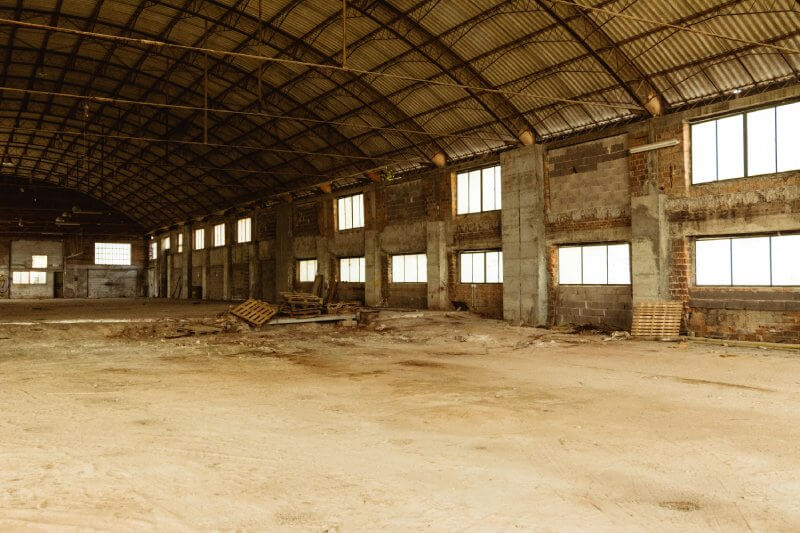
Warehouse and workshop clearance: Remove pallets, shelving, packaging, workbenches, surplus stock and general contents where the items fall within an agreed clearance scope.
Storage unit clearance: Empty business storage units, archived stock and overflow spaces that are no longer needed.
End-of-lease and landlord handover: Remove the agreed loose contents so cleaning, repairs, inspections or fit-out work can begin.
Partial or phased business clearance: Clear one room, one floor or one category of items without emptying the whole premises.
What We Can Clear
The service covers agreed loose contents from commercial premises. We confirm in advance what is included, what is excluded and whether any items need a separate specialist route.
Fixed fixtures, building materials, ceilings, flooring, partitions, plumbing, cabling and structural strip-out work are not part of an ordinary clearance unless explicitly assessed and quoted.
- Office furniture, desks, chairs and meeting-room furniture
- Freestanding cabinets, racking, shelving and storage units
- Retail fixtures, display units and non-hazardous unwanted stock, where agreed
- Packaging, cardboard, paper and general non-hazardous business waste
- Computers, monitors, printers and other electrical equipment, where agreed
- Break-room and kitchen contents from staff areas
- Loose contents from offices, shops, salons, workshops, studios, warehouses and small business units
Need the premises cleared to an agreed deadline?

What We Need to Know Before Quoting
A good commercial-clearance quote depends on more than the size of the unit. To price it properly, we need to understand the contents, access, restrictions and any paperwork or specialist issues.
Photographs or inventory: Show us the furniture, equipment, waste and any stock that needs removing.
Photographs or inventory: Show us the furniture, equipment, waste and any stock that needs removing.
Site access: Tell us about loading bays, shared yards, shutters, lifts, stairs, permits, parking and security arrangements.
Dismantling and handling: Identify large furniture, counters, shelving or equipment that may need dismantling before removal.
Waste type: Flag electrical items, confidential material, liquids, batteries, fridges, chemicals or anything unusual.
Authority to dispose: Make sure it is clear which items are leaving and which belong to the landlord, another tenant, a finance company or a third party.
Sorted, not skipped
85%+ diverted from landfill
Across the average domestic clearance.
Commercial Waste Means Commercial Waste Paperwork
Waste from business premises is commercial waste. It cannot be treated like ordinary household rubbish, even when it looks similar.
Registered waste carrier: Use a properly authorised waste carrier for the job.
Waste transfer note: Non-hazardous commercial waste still needs the right transfer documentation.
Accurate waste description: The load needs to be described properly so it can go through the correct route.
Records kept: The relevant waste-transfer records should be kept for the required period.
Hazardous waste handled separately: Hazardous materials, if accepted at all, need additional controls and should never be assumed to be part of a standard clearance.
IT Equipment and Confidential Waste Need Clear Instructions
Businesses often want old paperwork and IT equipment removed at the same time as the furniture. That can be fine in some cases, but confidentiality and data security need to be agreed before the job starts.
- Separate confidential paperwork from general recycling and mixed waste
- Identify data-bearing devices such as computers, servers, laptops, phones and hard drives
- Confirm whether secure shredding, data erasure or certified destruction is required
- Do not assume that ordinary collection or recycling amounts to secure destruction
- Use a suitable specialist route where confidential records or data-bearing devices need extra protection
Secure destruction must be agreed in writing
If secure document destruction or data destruction is required, let us know before booking so the job can be planned properly. If it has not been agreed, confidential material should not be treated as ordinary clearance waste.
From Site Review to Cleared Premises
Send the scope. Provide photographs or an inventory, the site address, access details, deadline and any landlord or building-management requirements.
We assess the clearance. Larger, mixed or access-sensitive jobs may need a site visit before the quote is confirmed.
Agree the plan and paperwork. We confirm what is included, identify specialist waste or data risks, and agree timing and waste-transfer requirements.
We clear the agreed items. The team removes and sorts the agreed contents, then confirms completion against the agreed scope.
Common Questions
What types of premises do you clear?
The service can cover offices, shops, salons, workshops, warehouses, storage units and other small to medium commercial premises, subject to the agreed scope and waste type.
Can you clear a premises outside normal business hours?
Potentially, yes. It depends on availability, building access, local restrictions and the nature of the clearance. Tell us your permitted working window when you enquire.
Can you clear just one area rather than the whole building?
Yes. We can clear one room, one floor, selected items or a specific category of contents. The scope is agreed before work begins.
Can you remove office furniture and electrical equipment together?
Often, yes, but electrical items need the correct handling and waste route. Tell us exactly what needs removing so the quote reflects the job properly.
Do you provide a waste transfer note?
Commercial waste should be transferred with the correct documentation. We can confirm what paperwork is included as part of the quote before you book.
Can you remove confidential paperwork?
Only if the service for confidential material has been agreed in advance. If secure shredding or certified destruction is required, that must be specified before the clearance starts.
Can you remove computers, servers and hard drives?
Potentially, yes, but data-bearing devices need an agreed process. Do not assume that ordinary removal or recycling amounts to secure data destruction.
Can you clear stock from a shop or storage unit?
Potentially. We need to know the quantity, materials, ownership and whether any stock is branded, perishable, liquid, hazardous or otherwise restricted.
Can you carry out a strip-out or dilapidations work?
Not as part of a standard loose-contents clearance. Strip-out work, repairs, reinstatement and dilapidations items must be assessed and quoted separately.
How much does industrial clearance cost?
The price depends on the type and amount of contents, labour, dismantling, access, timing, disposal route and any paperwork or specialist requirements. We assess the scope before confirming the quote.
How quickly can you clear business premises?
That depends on the size of the job, access, waste type and current availability. If you have a lease-end or handover date, tell us when you enquire and we will confirm what is realistic.
What areas do you cover?
The intended service area includes Ranskill, Retford, Worksop and surrounding parts of North Nottinghamshire and South Yorkshire, subject to confirmation of the final business coverage.
How quickly can you clear a business premises?
That depends on the scope, access, paperwork, specialist waste and current availability. Provide the handover or move date when you enquire and we will confirm what is realistic.
What areas do you cover?
The intended service area includes Ranskill, Retford, Worksop and surrounding areas, subject to confirmation of the final business coverage.


Tell us what needs clearing — we’ll send a free quote, fast.
Photos by WhatsApp are the fastest way to a price. We typically reply same day, and we won’t pressure you.